
What Is a Carport?
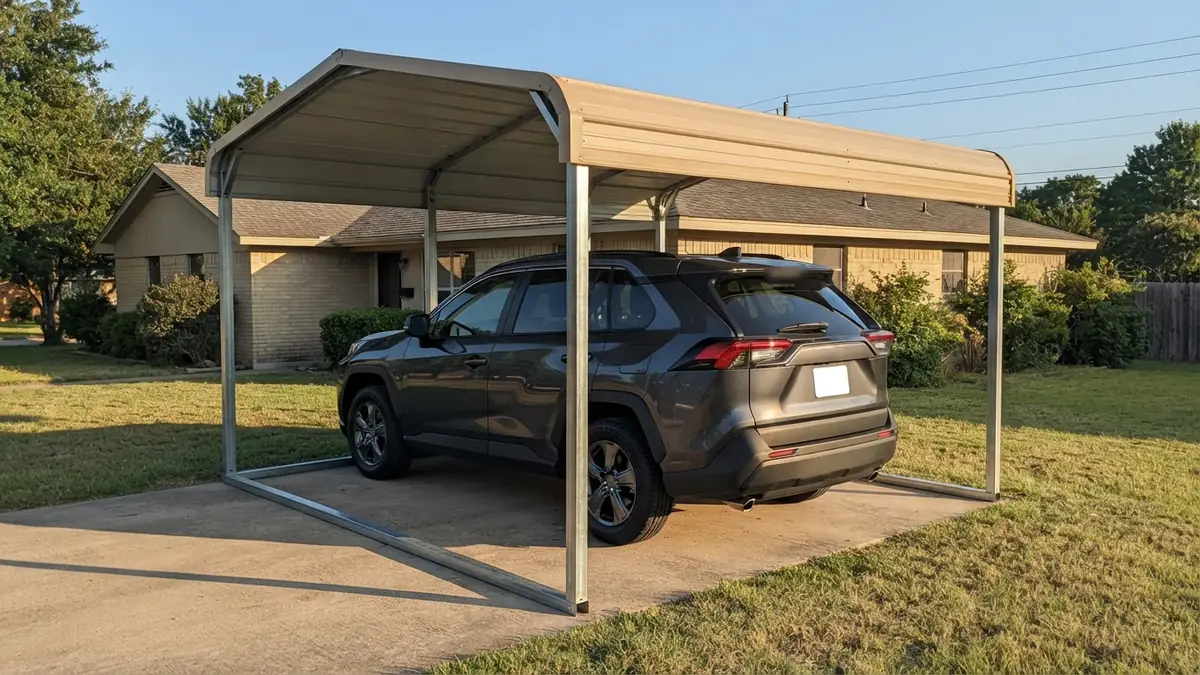
A carport is a roofed structure that shelters a vehicle without full enclosure. The model building codes require a carport to be open on at least two sides. A structure open on fewer sides counts as a garage under the same model codes.
Sources: International Residential Code R309.2 (2018 edition), International Building Code 406.3.3 (2021 edition), Merriam-Webster and Wikipedia, checked October 2026.
Last verified:
CarportBay Editorial Team Last verified
On this page
What counts as a carport?
A carport is a roofed structure on posts or a frame, built to shelter a vehicle. The International Residential Code (IRC), section R309.2, says a carport must be open on at least two sides. The International Building Code (IBC), section 406.3.3, says the same. A structure open on fewer than two sides counts as a garage. A carport closed in on three sides therefore stops being a carport under the codes. Whether a carport needs a permit depends on the local jurisdiction, and the carport permit rules guide explains how it works.
What are the parts of a carport?
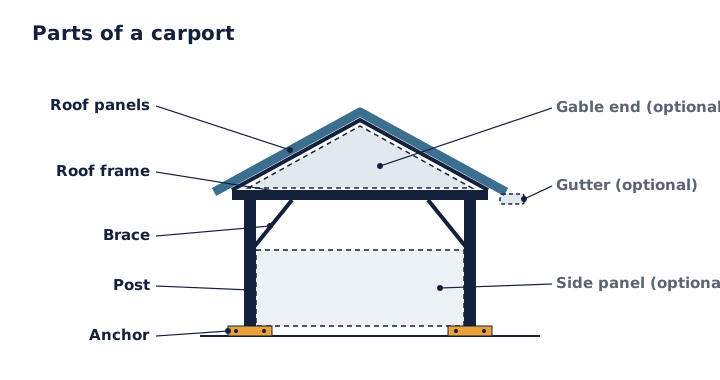
Most carports share five parts: roof panels, a roof frame, posts, braces and anchors. The roof panels cover the vehicle, and the roof frame holds the panels. Posts, also called legs, carry the roof to the ground. Braces stiffen the frame, and anchors fasten the posts down. Some carports add gutters, gable ends or side panels. The carport buying guide covers how buyers choose among complete carports.
What types of carports are there?
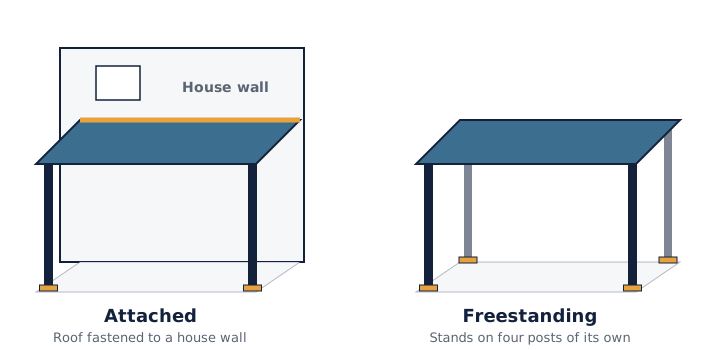
Carports differ by position, size, material and cover. An attached carport has its roof fastened to a house wall. A freestanding carport stands on its own posts. A single-car carport shelters one vehicle, a double (2-car) carport shelters two, and larger versions cover an RV or a boat. Frames are steel, aluminum or wood, and the carport materials guide compares them. A portable carport uses a frame with a fabric or vinyl cover. The carport size guide covers dimensions.
What is a carport used for?
A carport shelters a vehicle from sun, rain, hail and snow. It gives limited protection and lets more air move around the vehicle than a garage does.
How is a carport different from a garage, shed or canopy?
The difference comes down to sides. A structure open on at least two sides is a carport, and one open on fewer sides is a garage.
| Feature | Carport | Garage |
|---|---|---|
| Walls | Open on at least two sides | Walled and roofed, with a door |
| Code class | Carport (IRC R309.2, IBC 406.3.3) | Garage, including a structure open on fewer than two sides |
| Protection | Limited protection and more airflow | Full enclosure around the vehicle |
A shed is a simple structure built for shelter or storage, while a carport is built to shelter a vehicle. The carport vs shed page sets them side by side.
A canopy is a protective covering, such as an awning, while a carport is a roofed structure on posts or a frame.
Where does the word carport come from?
Carport is an American word, and Merriam-Webster dates its first known use to 1939.
Common questions about carports
A carport is open on at least two sides, while a garage is walled and roofed with a door. A structure open on fewer than two sides counts as a garage under the model codes.
A carport gives limited protection because its open sides let weather and air reach the vehicle. A garage encloses the space, and a carport leaves it open.
A driveway is a private road that connects a building to a public road. A carport is a roofed structure that shelters a vehicle, and it can stand beside or over a driveway.
An attached carport has its roof fastened to a house wall. A freestanding carport stands on its own posts. Each must stay open on at least two sides to count as a carport under the codes.
Carport parking means parking a vehicle in a space under a carport roof. The space is covered overhead and open on at least two sides.
Both spellings appear in searches. Carport, written as one word, is the dictionary spelling, and it names the same roofed structure.
Where to go next
Find more in CarportBay's carport guides, or go straight to the topic you need.
Read the permit rules
See how permit rules apply to a carport.
Read the size guide
Find the carport size that fits your vehicle.
Share your ZIP code and project details, and we match you with installers and manufacturers that serve your area.
Ready to move forward
Get Matched With Installers Near You
Tell us a bit about your project and we will connect you with vetted installers and manufacturers who serve your area. There is no cost or obligation to request information.
See the affiliate disclosure page for how referrals work.